

Preserve before Replace
A restoration program for eligible commercial flat roofs. Find out whether what you have can be preserved before committing to replacement.
Florida Licensed Contractor · CCC1336804 – Roofing · CGC1510808 – General Contractor
More than a surface coating.
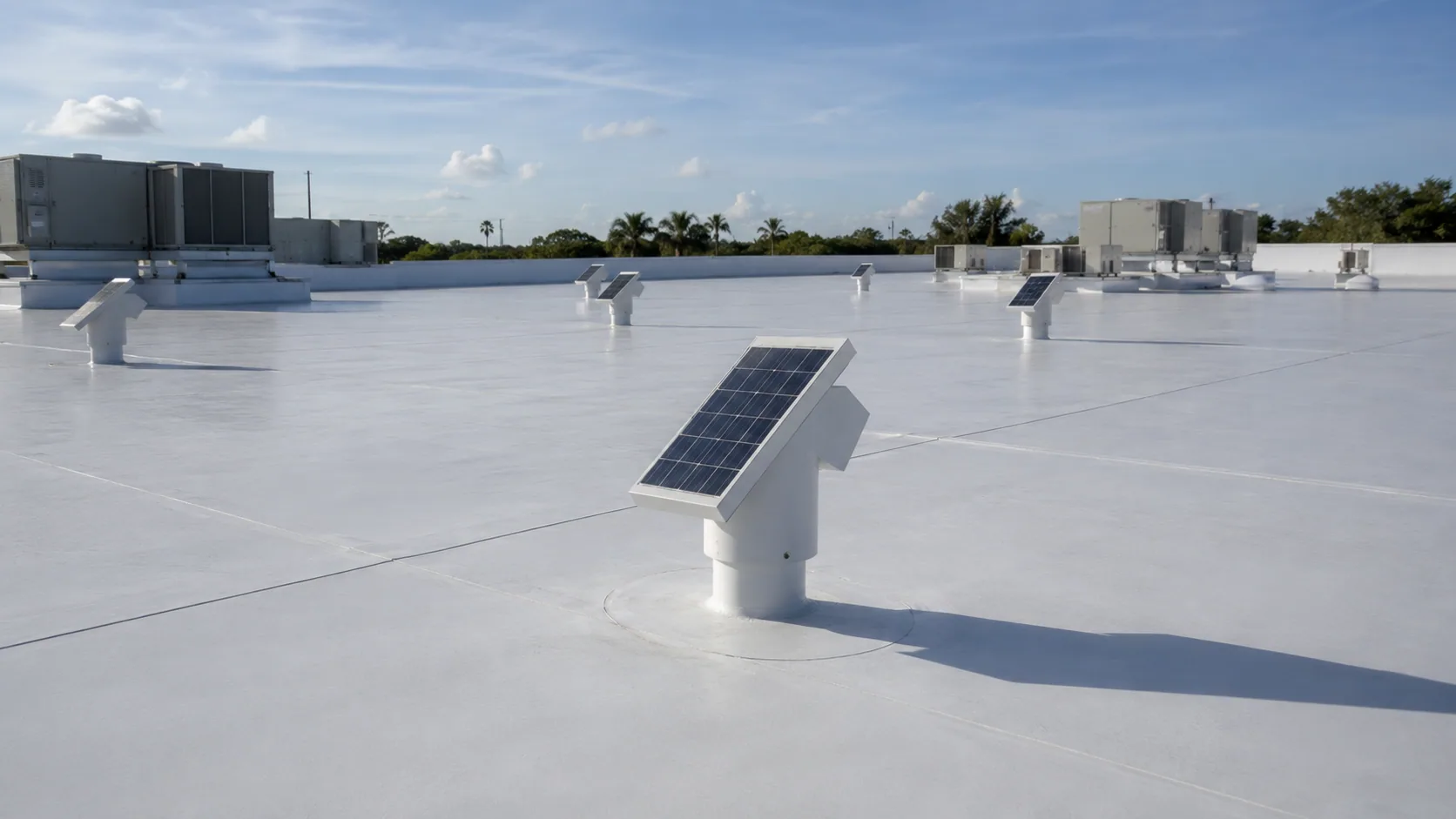
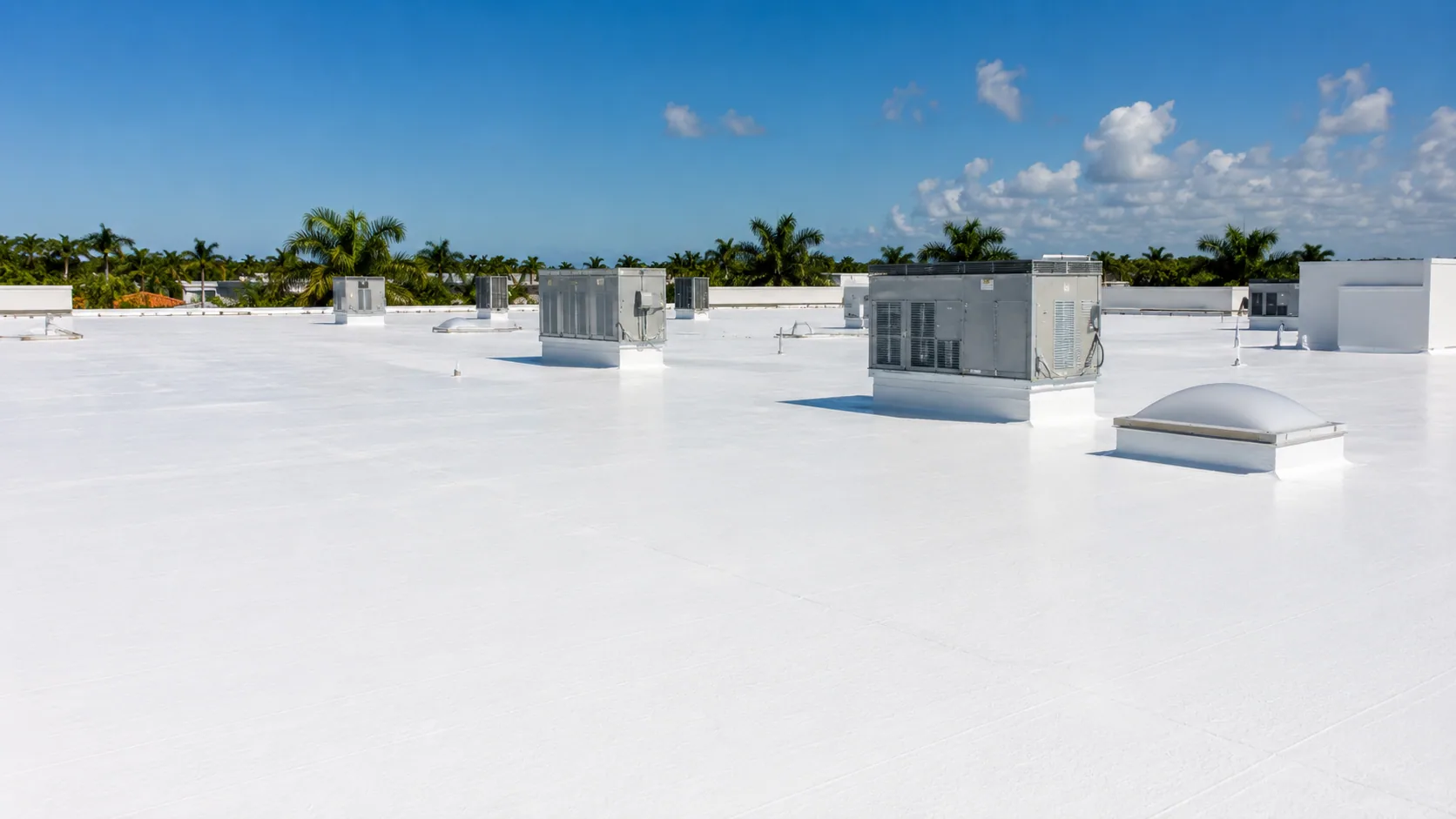
MoistureX™ is Augustine’s restoration program for eligible commercial flat roofs. It combines repairs and a protective coating with solar-activated two-way vents that support moisture release beneath the surface.
The goal is to preserve what is still serviceable, with an evaluation before work begins and follow-up checks to track progress.
30–50% less
Compared with full replacement on qualifying projects. Actual savings depend on existing conditions and the work required.
20-year NDL
Manufacturer-backed coverage for materials and labor, subject to the selected system’s requirements and written warranty terms.
Scheduled moisture checks
Scans every six months for the first 24 months, then visits every three months if moisture remains. Preventive maintenance inspections are included for the first three years.
Start with the condition—not the assumption.
An evaluation looks at the existing materials, moisture, drainage, and repair needs to determine whether restoration is a practical option.
Restoration may make sense when
The membrane and underlying materials remain suitable for restoration.
Moisture concerns can be addressed and progress can be checked.
The system can meet the manufacturer’s restoration requirements.
Replacement may be necessary when
Damage is too extensive for a reliable restoration.
Structural or deck issues require removal and repair.
The existing system cannot meet restoration requirements.
Commercial flat systems we evaluate
MoistureX™ is not intended for metal, steep-slope shingle, tile, or residential pitched systems. Material type alone does not establish eligibility.
Five steps. One clear path.
Understand the condition, carry out the work, and check the results.
-
Evaluate
Inspect the property and use moisture scanning to identify concerns and assess restoration potential.
-
Restore
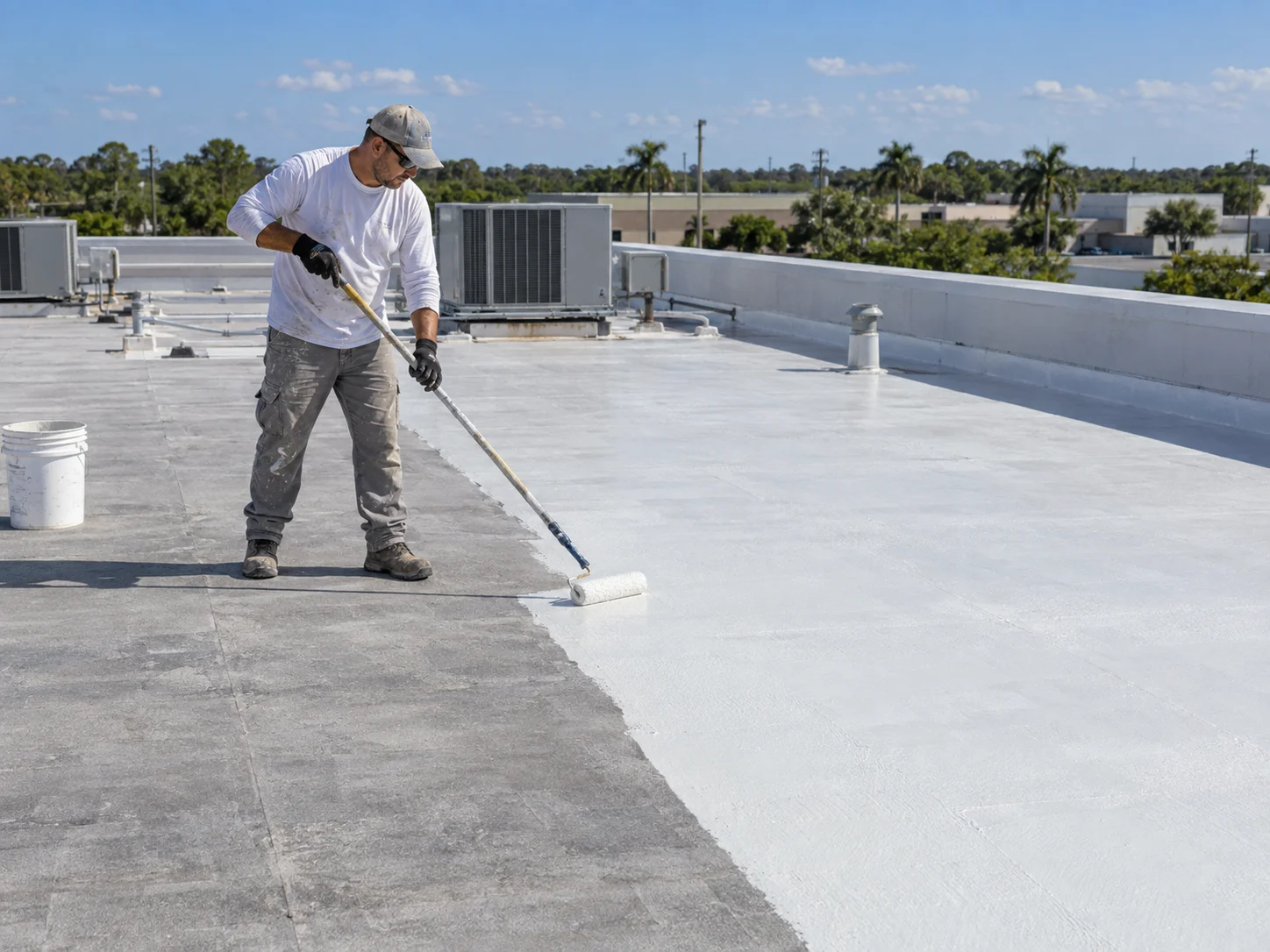
Complete necessary repairs, prepare the surface, and apply a manufacturer-approved coating system.
-
Dry-Out
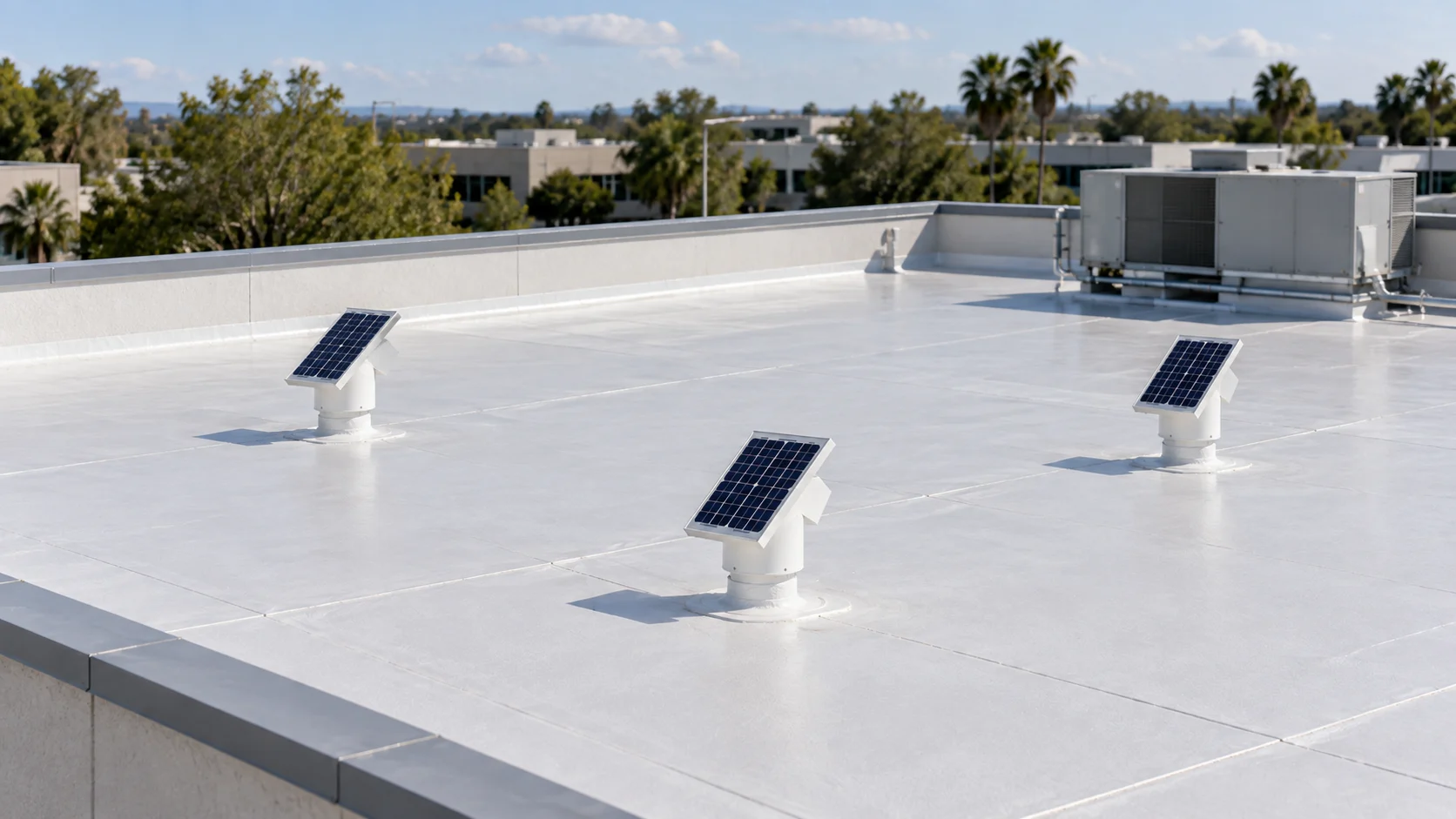
Solar-activated two-way vents support moisture release. Dry-out typically takes 4–6 months, but heavily saturated insulation can take up to 24 months. Vents remain in place until dry-out is confirmed.
-
Validate
Scan every six months for the first 24 months. If moisture remains after 24 months, visit every three months to track dry-out progress.
-
Protect
Provide work records, applicable warranty documents, and preventive maintenance inspections.
Understand what is happening beneath the surface.
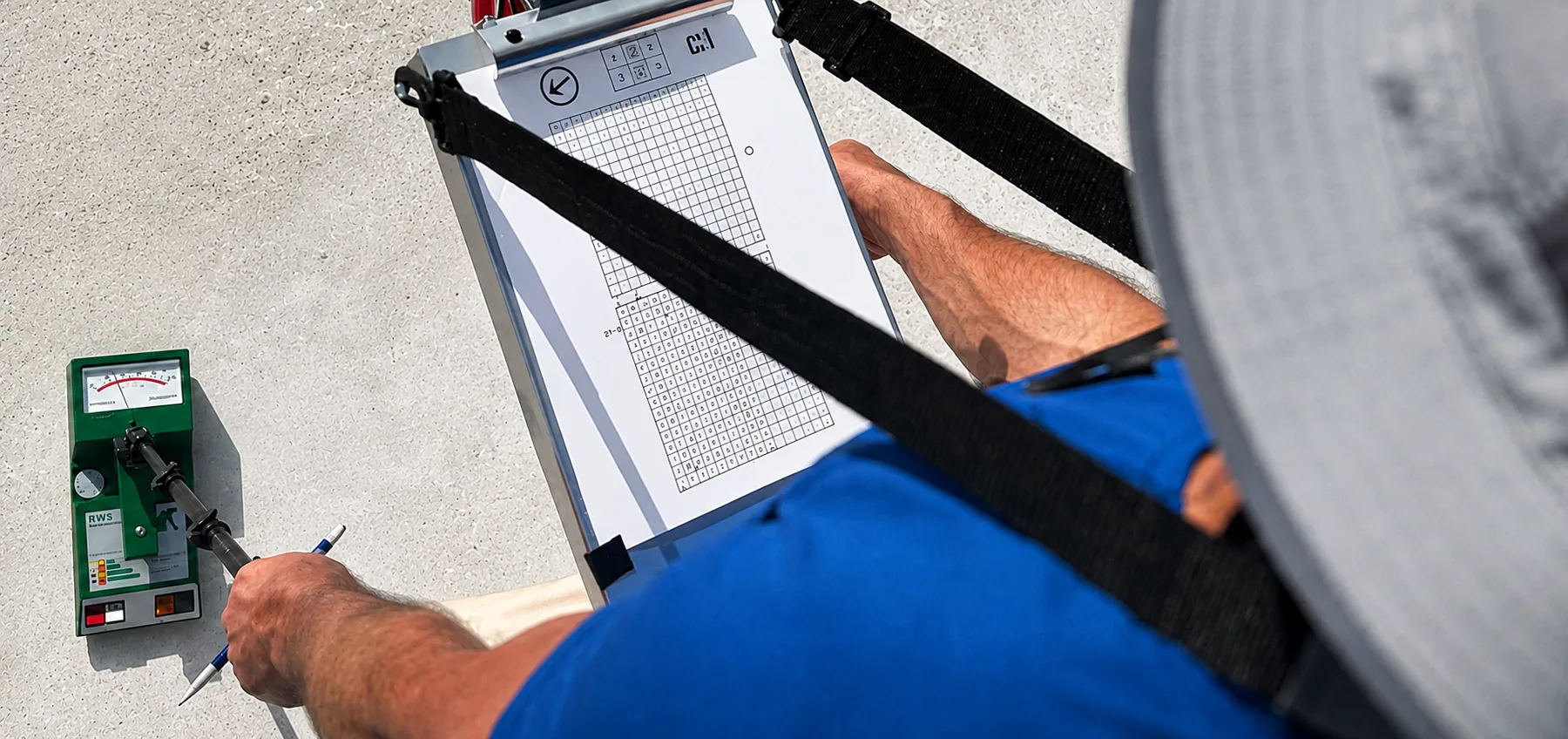
Electrical impedance scanning measures changes in how roof materials respond to an electrical signal. Calibrated readings help identify moisture patterns within the assembly, beyond what a visual inspection alone can reveal.
Calibrate to the assembly
Readings are checked against a confirmed wet insulation reference. This helps account for material differences when interpreting the scan.
Map the findings
Measurements taken across a documented grid are organized into a color-coded moisture map. The map identifies areas needing attention and supports the restoration plan.
Compare over time
Recorded locations and baseline findings provide a reference for follow-up evaluations, helping track changes and focus attention on areas that remain wet.
Clear records. Continued support.
Your records connect the initial findings, completed work, and follow-up checks, so you know what was addressed and what needs attention next.
Qualifying MoistureX™ restorations include a manufacturer-backed 20-year No Dollar Limit (NDL) warranty covering materials and labor. Coverage is subject to the selected system’s manufacturer requirements and written warranty terms.
Assessment & Follow-Up
Moisture mapping establishes the baseline. Scans occur every six months for the first 24 months, followed by visits every three months if moisture remains.
Work & Warranty Records
Photos, repair details, and applicable warranty documents keep the completed scope clear.
Preventive Maintenance
Preventive maintenance inspections (PMIs) are included during the first three years, with documented condition reports.
Preserve more. Send less to the landfill.
When an existing system qualifies for restoration, keeping usable materials in service can reduce the environmental impact of a full replacement.
Less tear-off waste
Preserving suitable insulation and other components reduces the volume of discarded material.
Fewer replacement materials
Retaining existing materials can reduce the need to manufacture and transport new ones.
More useful service life
Repairs, moisture management, and ongoing care focus on extending the life of what can be responsibly preserved.
Preservation is appropriate only when the condition supports it. Environmental benefits vary with the materials retained and the work required.
A few things worth knowing.
Can a system with trapped moisture still qualify?
Yes. MoistureX™ is designed to dry out commercial flat roofs with trapped moisture. An evaluation must first confirm that the system meets the conditions for restoration and the manufacturer’s requirements.
Can a previously coated surface be restored?
It may be possible. The evaluation considers the existing coating, its condition, and whether it can support the proposed restoration system.
How long does dry-out take?
Dry-out typically takes 4–6 months, but heavily saturated insulation can take up to 24 months. We scan every six months for the first 24 months. If moisture remains after 24 months, we visit every three months to track dry-out progress.
Does MoistureX™ eliminate the need for replacement?
No. Preservation is the goal only when the existing system can be restored responsibly. If the condition calls for replacement, that remains the appropriate recommendation.
What if insulation is still wet after 24 months?
If moisture remains after 24 months, Augustine visits every three months to track dry-out progress. Any additional vents needed for dry-out are installed at no additional cost to the client, and vents stay in place until dry-out is confirmed.
Can this qualify as a tax-deductible repair?
It may qualify as a deductible repair or maintenance expense, depending on the scope of work and your tax circumstances. Some work must instead be treated as a capital improvement. Ask your tax adviser to confirm the appropriate treatment; an immediate write-off is not guaranteed. See the IRS guidance on repairs and improvements.
What happens after the work is complete?
Augustine provides work and warranty records and scans every six months for the first 24 months. If moisture remains after 24 months, visits occur every three months to track dry-out progress. Preventive maintenance inspections are included during the first three years to help track condition and care needs.
Find out what can be preserved.
Share your property location, known concerns, and any replacement recommendation. Start with an evaluation to understand your options.